Neuro-Wellbeing & The Developing Self

Neuro Well-Being & The Developing Self

Why neuroscience? I chose this passion as, personally, I am drawn to raising awareness and advocacy for mental health in youth. It’s so important to pay attention to our mental health. I became more interested in neuroscience when a neurologist visited my school, he started talking about what exactly occurs in your brain when you have a stress overload. That sounded a lot like me! Since then, I knew that I wanted to join neuroscience. I wanted to discover and learn all about the brain, the single most important mystery in the universe. And guess what? So can you!

  • Are you feeling like the motivation to finish your work, laundry, errands, or commitments is getting harder for you to find? Many times, when we face stress or hard times, we face a weakening in our dopamine signals. I personally have faced a loss in motivation countless times. Let’s dive into what happens to our brains when we lose motivation, and strategies I’ve used personally to overcome procrastination, and get myself back on pace.

    Dopamine is a neurotransmitter and hormone that is released when something feels good, or when we expect a reward for something. Dopamine weakens when events in our life feels boring, or not amusing. Think about a time when you knew you had to get something done, but you just didn’t care to. You probably got annoyed when reminded of what you needed to do, and the fact that you have made little to no progress.

    When you feel lazy, picking your laundry off the floor into the hamper can feel like a huge task. This is because a part of the brain called the anterior cingulate cortex, needs to determine if something is worth doing. When you don’t feel motivation, this system alters itself so that simple task feel harder, and much more complex. When I’m not motivated, and a day goes by where I pretty much didn’t get any work that I was supposed to get done, I still feel “Exhausted” in the sense that my brain is more inclined to burn out easily.

    Another way this plays out neurologically is when you feel confusion and extreme fatigue. The prefrontal cortex and the basal ganglia are both working to help you begin and continue your commitments. When these parts of the brain begin to slow down, you will feel like you don’t know where to start, or you don’t know how to continue with a task you were supposed to be doing. This best describes loss of interest and apathy.

    So what are you supposed to do with all of these overwhelming feelings? How do you even get started? I am going to share with you 4 key strategies that have helped me get back on track fast and efficiently.

    1. Be Specific about what you need to get done, and the duration.

    Think about what you need to do, and focus on only one thing to get started. It’s important that you are telling yourself exactly what you need to do and how long you think you will spend time on it. For example, it could look something like, Today I need to practice my dribbling in basketball for 10 minutes. When I started using this strategy, I ended up realizing exactly what I needed to get done. Before, I was mindlessly overwhelming myself with lists of tasks that I never ended up completing. I highly recommend using a planner to write down your specific, minimal plans the night before, so you know exactly what work is practical for you to begin.

    2. Take it slowly

    Sometimes this is hard, because we slack off till the deadline, or we are behind in things that should have already been done weeks ago. What I mean by this is when you’re planning each day, the work you need to finish shouldn’t overwhelm your brain with a million things that you, yourself, know you won’t complete. You might start stressing yourself out by saying that you have to get all these things done today, and can’t take it one at a time. You’ll end up putting them all on your list, and find you haven’t even completed one. If you don’t even start somewhere small, you can’t expect to magically be able to tackle a tsunami of tasks.

    3. Be Mindful.

    Think about why you are doing these tasks. If you don’t get your laundry done, how are you going to go outside and run errands with no clean clothes? If you don’t get your part of a project done, how will this reflect on your grade? How are your work colleagues, or group partners, going to feel? Think about the importance of the matter, and be mindful in identifying the reasons that will help motivate you.

    4. Time yourself.

    Set timers on when you should wake up in the morning, begin your tasks, finish your tasks, and so on so forth. Factors that can be helpful are time-blocking and the Pomodoro technique. When I couldn’t get my work done fast enough, a lot of the reason was that I was tired of doing the work, and I couldn’t figure out a good schedule. I started setting 25-minute timers and getting as much work done as I could in one specific topic or section. Then, I’d take a 5-minute break and continue working for 25-minutes. This helped me a lot. I started getting work done so much faster and more efficiently.

    If you know something is going to take you less time than you scheduled, be as accurate as possible to make sure you aren’t wasting your time. Elon Musk uses 5-minute blocks for every task he has to get done. Time-blocking can help us stay focused, eliminate interruptions, avoid decision fatigue, and so much more.

    In conclusion, it’s very typical to get overwhelmed and lose motivation. I have faced loss of motivation or desire to get my work and errands done countless times. Sometimes it feels like you don’t know how to begin to get back on track. It’s important to recognize what is happening in our brains, so we can better improve and further develop ourselves. We need to make sure that we are listening to our emotions and what our brain is trying to say to us, so we can have a stable neuro-wellbeing. Until next time, 🙂

    -R.J.
  • Sometimes we all need to walk away. Do you ever have a situation where you’re putting yourself in a place where your mind is receiving stress signals, but you’re ignoring them? Let’s dive into exactly what happens in your brain in a situation where you need to walk away. The amygdala is a part of the brain which is responsible for evaluating situations and determining responses. In a stressful situation, it becomes hyperactive, which gives symptoms like fear, discomfort, and anxiety. The prefrontal cortex, our thinking part of the brain, is in charge of our decisions and self-control. This can be affected by chronic stress, which gives the “Cloudy Mind” impression. More areas of the brain are being affected by the release of unhealthy stress hormones, by choosing to walk away, you interrupt the stress cycle, which is the best way for you to regain control of those raging thoughts. Cortisol and adrenaline, (which is released by the amygdala,) will also not be produced at such a high rate when you choose to walk away. It’s important to look out for our Neuro-Wellbeing and Self development by making sure we’re not putting ourselves in uncomfortable situations. It may feel like defeat, but remember, it’s discernment.

    Just a quick message from me to you. Until next,

    -R.J.

  • Does it ever feel like you’re on an endless loop? Trying to see some progress, or change, but you’re still stuck in that same old place? Confucius’s quote,  “It doesn’t matter how slowly you go, as long as you don’t stop.” Reminds us that we are not in a competition to have the best life, most friends, or filthy wealth. It doesn’t matter that we aren’t reaching our goals fast enough, as long as we make sure that we’re still trying. Let’s dive into exactly what happens when our brains aren’t making any progress, and how we can find ways to get back on track.

    1. Cognitive Bottlenecks

    When mental health symptoms  (depression, anxiety, etc.) don’t seem to slow down, the brain typically reduces the efficiency in how it processes information. This is why things feel foggy and confusing when we’re trying to figure out what’s happening. Have you ever had something really stressful happen, and found that it’s sort of hard or slow to recall all the details? This can be very discouraging. Despite all your hard work, your mental health symptoms are persistent. Our brains have a limited thinking space, and mental health symptoms tend to overcrowd that space fast. This is one of the biggest ways that creates the illusion that nothing is changing.

    2. Is my neuroplasticity working? 

    In order for the brain to recover and adapt from mental health struggles, the brain needs to create new neural pathways and improve existing healthy ones. This, too, is a barrier, as this takes a lot of time. Emotional regulation circuits require consistent use, so they can shift. Habits and coping mechanisms need to be reinforced so they can come naturally. It’s like training a dog, you need to reinforce negative and positive reactions so the dog has the ability to differentiate the two, and lean towards the one that brings the treats. 

    3. The brain is the most complex mystery in the history of the universe. 

    Well, we already know that. But Guess what? That makes changes slower, too. Our mental health is not controlled by just one area of the brain. A lot of systems need to work together. Consisting of our emotion regulation, (amygdala, prefrontal cortex), memory and rumination, (hippocampus), stress response, (HPA axis)  and Motivation and reward. (dopamine pathways) So many of our systems are working together, so change doesn’t happen straightaway. 

    What can we do to try to see changes fast?

    I’m going to share a few ways that we can encourage our brains to shift, and respond to the new way of living. One with little to no mental health symptoms. 

    Change your environment – The nervous system is always looking to your surroundings. Small environmental changes can lower cognitive overload and stress. So clean your room, or open a window, change the lighting, go outside, or walk for 5 minutes!

    Do an action that gives you a sense of control – if you feel helpless, it will slow your mental health progress. The brain releases reward signals when you complete a small task. Send a message to someone, drink more water, make your bed, write down your thoughts. 

    Reduce overwhelm as opposed to adding more effort- We tend to push harder, but the brain can work productively only when you remove strain. The stress system activates when you feel pressured, which doesn’t allow emotional regulation to flow. Shorten your to-do list, say no to things that drain you, and take a break without feeling bad. These things will give you a sense of relief.

    In summary, when your brain seems stuck, it doesn’t mean that you haven’t stopped running. You’re just running a little slower than you hope to. There are so many ways to improve our mental health, and it all works toward our neuro well-being & self-development. 

    Talk to you soon,

    – R.J.

  • Is your brain running 1 million tabs, but the WIFI’s out? Mental health isn’t reinforcing perfection. It’s learning how to refresh, reboot, and even force quit, when things get out of control. Tune into the Neuro well-being & Developing Self for upcoming blogs, facts and resources, soon, so we can debug those stress glitches together!

    -R.J.

  • What’s your general outlook on life and situations? If you typically see everything in a negative view, you could be considered a pessimist. How about seeing things in a positive view? Maybe you’re a optimist. Maybe you just see things exactly how they are, with logic and point of view. These outlooks of life and situations all counter  our neuro-well being and developing self. Let’s indulge further into exactly what these mean and why it has been chosen for us specifically as individuals.

    Pessimistic behaviour can typically form from negative life experiences and traumatic events, betrayal or negligence within the social aspect, and even genetics and mood disorders. If you typically view or almost always find the bad in a situation regardless of how hopeless it may be, think about what exactly drives that naturality. Maybe you grew up with pessimistic parents, who constantly shared and vocalized their negative outlooks on every situation, even specific situations. Is your first instinct towards rich people  that all of them are hypocritical? Maybe you personally suffered from bullying or a trauma or an abuse that created that instinctual reaction or even defense in you.

    Optimistic behaviour has a similar influential pattern. You could essentially become an optimist by having positive life experiences, extreme support and or comfortability within the social aspect, genetics, etc. Sometimes optimism is a difficult but beneficial choice you have to train with the development of self. You’ve most probably heard the metaphor “Glass half-full versus Glass half-empty.” An optimistic person would see the glass as being half-full, focusing on what they have that’s positive rather then what they lack. A pessimistic person would focus on the negative disappointment of the glass being half-empty, focusing on what’s not fulfilling and beneficial. 

    Realist behaviour focuses on exactly what you can see as opposed to trying to make the best or worst of a situation. Life experiences consisting of hardships and challenges and loss, as well as growth, development, and achievement can cause a person to be a realist. Maybe you were optimistic before you lost someone you loved, now you see the world as unpredictable as it is, and acknowledge death so heartachingly.

     Personally speaking, I was quite quick to trust any person I came in contact with, until I suffered from betrayal and bullying.  I then started viewing things with a realistic perspective. Maybe you’ve started your own business or overcame a situation where you didn’t have enough to provide for yourself, you may start viewing things matter-of factly, or a pragmatic approach to work and resource. The realist view the glass half-water half air. Realism involves viewing the glass impartially. Seeing a situation exactly how it is rather than what one wishes it could be what one loves or hates of it.

    In review, sometimes when we experience lack of neuro-wellbeing we can be drawn to change our outlooks of life, like starting as an optimist but becoming  influenced into pessimism. Psychologically, we can experience a learning process called “Classic Conditioning” it causes a previously content or neutral stimulus to be accompanied or associated with a stimulus that demands or triggers a response. 

    The Little Albert Experiment1

       In 1920, A university professor named Dr. John B. Watson wanted to test classic conditioning, a volunteered 9-month old toddler referred to as “Albert B” was directed to play with white furry objects. Initially, Albert showed love and affection and displayed contentment while playing with these objects, but as the experiment played out, Dr. Watson would create a loud noise behind Albert’s head to scare him every time he played with the furry white objects. After several repetition, the child was conditioned to be frightened by white furry objects. The experiment was conclusive to prove that humans are conditioned to to like or hate, enjoy and fear something based on life experiences. 

    In conclusion, our brains are highly intelligent, responsive, and impactful. It’s very difficult to move forward from a hard life experience that drives us towards pessimism, or causes us to lose our child-like hopeful thinking. With the right therapy and support, we can train our minds to become the most powerful version of ourselves, and it all starts with the developing self. 

    – R.J.

    October 3rd 2025

    References 

    1. 7 Famous Psychology Experiments | King University Online

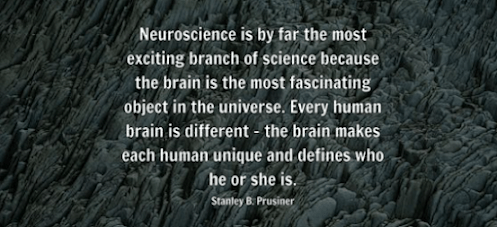
  • Do you want to know 3 facts about Neuroscience and your amazing brain? Our brains are the fundamental reason for our existence, the most complex known structure in the universe. Exactly what Stanley B. Prusiner says in the quote above, “The brain is the most fascinating object in the universe, the brain makes each human unique, and defines who he or she is.”

    Fact #1: The brain is always changing through a process called Neuroplasticity..

    The human brain undergoes a process called neuroplasticity, which, by definition, is  “A process that involves adaptive structural and functional changes to the brain¹.” Essentially, it’s your brain’s remarkable way of adapting and changing itself to grow, and even pruning connections to new life experiences, events, and so on. The connections and pathways it creates are between neurons. Say you join a new sport, the more you practice and play that sport, the stronger that neural pathway will become. The same applies if you quit that sport; the neural pathway will become weakened. This process heavily impacts our developing self, our new interests, and personality changes. 

    Fact #2:The brain cannot feel pain…

    Isn’t that pretty cool? Though our brains can process pain signals from other parts of our body, the human brain doesn’t have any pain receptors. Let’s put it simply, our body contains nerves that have unique sensors referred to as “Nociceptors” that react when you get a cut or a burn. Our brain doesn’t contain these sensors. Say you get a paper cut on your finger, the nociceptors in your fingers sense what they believe to be potential damage, and send a signal up your nerve, which travels through the spinal cord to your brain. Once the brain receives the signal, it will process it and compare it to similar experiences in the past. The remarkable aspect of this is that the pain isn’t actually coming from your finger; rather, the brain produces that sensation in response to the message it receives. 

    Fact #3: Our brain cannot actually multitask!

    Hold on, that doesn’t seem true. I mean, I’m sure everyone has watched TV and done their homework at least once in their life, right? Actually, it’s kind of an illusion. The brain jumps back and forth between the tasks you are trying to complete. This process is called “Task-switching,” and it’s not as easy as it may appear. When you did your homework and watched TV, the brain didn’t let go of one of the tasks that you were previously doing; it actually had remaining thoughts about the first task, which made it harder to concentrate on the next thing you were trying to focus your attention on.

    In summary, the human brain has so many more interesting facts that adhere to our self-development and neuro-wellbeing. It is so interesting to keep learning about these interesting processes that happen in our brains without us even really knowing. Keep discovering more about your amazing brain! 

    – R.J.

    **Resources:**

    1. Neuroplasticity – StatPearls – NCBI Bookshelf

  • Did you know that more than 85% of North Americans suffer from a lack of self-confidence¹? Why is it that something that might’ve seemed so simple long ago is now the root phenomenon of our day-to-day lives? Let’s explore how your self-confidence build-up can contribute to your Neuro well-being and self-development. 

    Self-confidence is the ability to have trust in your abilities, judgment, and several areas that contribute to the developing self. A lot of people struggle with this, but why? It could develop from various amounts of reasons. Society,  pressure, bullying,  putdowns, etc. When we lose this happiness and self-contentment that we once harboured as young children, is there any way to get it back? Think of your biggest insecurity. How did it develop? If it’s something to do with your physical appearance, you probably weren’t insecure about it until society inferred that you should. Maybe you’re insecure about something emotionally, perhaps you suffer from negative thoughts like “You aren’t good enough” or “Maybe if you talked like them, you would fit in.” It’s extremely difficult to tame this wild horse that doesn’t seem to leave you alone. Neurologically speaking, the human brain desires and needs constant validation; it isn’t to appear as needy or self-demanding. It is literally built into our very own neural pathways and is supported by chemicals such as dopamine to enter into our reward system. This becomes stronger and more painful when we no longer have confidence in ourselves. What are some strategies we can obtain to build up our self-confidence? We need strategies to help us build our self-confidence. I’m going to share with you 3 most helpful strategies that therapists and psychologists use to help others build it up. 

    Cognitive Restructuring 

    Cognitive Restructuring is an important strategy we can use to help us deal with negative thoughts that contribute to our low self-esteem. The key in cognitive restructuring is to identify, question, and replace the thoughts with more positive and realistic alternatives. For example, say you have this negative thought: “I’m going to mess up as a sales representative; people are just going to judge me.”  Identify and validate your feelings. Write it down, how it makes you feel inside. Then, challenge and question it, almost like a debate. “I’m passionate about providing people with guidance as a sales representative, and I’m good at it. Why should I be concerned?” Then, replace the thought. “I’m going to succeed as a sales representative; I’m confident in myself.” It might seem unreal or hesitant now, but with practice,  over time, this positive thinking will become engraved in your brain, and you will get your confidence back. 

    Practice Mindfulness and Self-compassion

    Mindfulness can help you truly feel your thoughts and feelings without judgment. You need to disregard the cycle of overthinking that fuels your lack of self-confidence. You need to think of your negative thoughts as valid, yet incomplete. Take time to realize the actual facts and beauty about yourself. When I was struggling with this concept, I came across something I read that reminded me to be mindful of my struggles instead of looking at it with an extreme pessimistic view. “Remember, this moment is not your life, it’s just a moment in your life.” -Ryan Holiday. This implies that whatever is hurting your confidence in any area of your life is valid, yet incomplete. 

    Be compassionate to yourself. You’re human, you’re going to make mistakes. And setbacks. Don’t let it convince you that you are unable to change and develop. Instead, respect yourself for the small changes you’ve committed to; the small desires of a growth mindset are what can determine real bravery. 

    Finally, take committed value-based actions. 

    Exposure is key to healing and building self-confidence in something you fear. Be certain you are doing it slowly and in a safe way. Pay attention to how much you can do in what amount of time. Don’t push it! Remember that you’re not the only person who suffers from a lack of self-confidence. Even people whose lives might match your exact dreams and goals still suffer from low self-esteem. If you want to hear more stories about this, check out the link below; it’s a true story.  

    How a Nuclear Physicist Overcame Self-Doubt – Nick Wignall 

    In summary, self-confidence is your right. You deserve to be confident and content with yourself! Even if you’re struggling with building back your confidence, know that you’ll eventually get there with the right help and support. Healing takes time; you can’t pick off a scab before it heals, it’ll just open up and bleed again. Until next time, 

    – R.J.

    Resources

    1. Low Self-Esteem Causes & How to Build It Up

  • Don’t you feel like it’s hard to stay positive and occupy your minds when you’re facing difficult times? I want to share with you 5 ways that help me stay positive when dealing with the fast-pitches life throws at you. Staying positive will help you achieve a contented neuro-wellbeing and contribute to the development of yourself. In no particular order, let’s dive in!

    #1: Journaling

    Journaling, writing down your feelings, it’s a great way to stay positive when life hits you hard. It allows you to give your head a break from those crazy thoughts. Our brains are much like carriers; we sometimes hold onto events or things that happened, and when we don’t release them, we come to a point where we feel like our heads are going to explode. Grab a piece of paper or a blank journal, and write down what you feel, what’s bothering you. You can even purchase a guided journal if you’re having trouble getting started. 

    #2: Sensory activities

    Have you ever gone to the beach and just played in the sand? Maybe you like slime or playdough, or a squishy toy. Occupying your hands with something to apply pressure to can physically relieve the tension that clouds up in our minds. Practice awareness when you feel it in your hands. Someone once told me they used to play a game wherever they went, use your five senses and say in your mind what is happening. It could look something like this:

    “The hot sand makes my hands and feet feel warm.”

    “The fresh breeze blows a soft tune that sounds harmonious.”

    “The beautiful colored  birds fly bravely in the sky.” 

    “The smell of salty sea water makes me feel calm.” 

    “The taste of the ice cream makes me want it to last forever.” 

    Sensory activities are a great way to distract and engage your mind. 

    #3: Walking or spending time outdoors

    Sometimes we can’t always force ourselves to get out as much as we’d like to, but taking a brisk walk, or even sitting out on the porch or a balcony, can really make a difference. The breath of fresh air is necessary for our brains to function properly. Walking can help improve your sleep cycle if that’s compromised by anxiety or a cloudy mind. Spend some time outdoors, take small steps. Maybe 1 minute today, maybe 1 minute for a week, take your time!

    #4: Read 

    Reading for me is so fun, and a great way to occupy my mind and get lost in a good book. If reading is something you’re trying to build on, also take your time with it. Read one sentence a day, it’ll turn into one page a day, then maybe a chapter or a few. Find a genre you like, engage your mind, literally picture yourself right there in the book. Try Audiobooks; you can even rest and play the audiobook in the background. Read something positive, like affirmations, self-help books, etc. Try reading!

    #5: Listen to Podcasts

    Listen to podcasts, motivational speakers, people you admire or like, anything that has a positive effect on your mind. I love listening to podcasts where people tell stories of their lives and connect them to the message. Listen to podcasts when you are getting your workout in, when you go on a walk, when you go to the gym, when you clean your house or your space. Find a person online whose messages you admire. You’ll find it makes life a lot more bearable!

    These are 5 of my favorite ways to engage my mind when I’m having trouble focusing on the positive. It’s important for our neuro-well-being to take care of and validate our emotions. Building your character up and making small improvements every day will definitely contribute to the developing self! Until next time, 

    -R.J.

  • Hi! My name is R.J. The Neuro-wellbeing & The Developing Self is a platform I created as a student who aims to raise awareness and advocate for mental health among young people. Whether you want to explore the adolescent brain, find ways to improve your mental health, donate to organizations, or purchase self-help resources, this is the place for you! Let’s make the world better, starting with our own brains. 

  • What Is True Happiness? 

    Several psychologists and neurologists have different opinions on this. Gandhi’s quote on happiness, working in alignment with what you think, say, and do, reminds us that our joy will not be fulfilled once we reach a certain goal or become a millionaire, but when we put action into having contentment with ourselves.  Let’s dive into this topic; you’ll soon realize how vital true happiness is for us as humans and how it can be served to you in a way you may not have thought of. It is necessary for our Neuro-Well-Being and self-development. 

    This past month, I finished the book “The Mountain is You” By Brianna Wiest. When reading this book, I discovered a universal truth about finding real happiness that changed my life. You see, as a human, you’ve probably experienced several moments in your life where you thought you’d be happy once you get something, or be up to your own standards. Wiest teaches us that our brains get comfortable with being uncomfortable, and even once we’ve reached a goal or desire that’s been nagging at our happiness for years, we still feel unsatisfied and need more to work towards to achieve happiness. This is how she concludes it:  “Happiness is not a state to be chased or acquired but a natural state that arises from inner peace and alignment¹”


    When I realized that I was unconsciously self-sabotaging myself by allowing my brain to stay in that rut of the feeling of lack, I became sort of angry and determined to get out of it. Similar to how James Clear stated, your identity influences your thoughts and behaviours.  You need to avoid telling yourself you’re not good-looking, and you will only be good-looking once you’ve undergone some intense procedure. Your identity is tied to your beliefs; if you have a negative view of yourself, you will have a negative identity. A Christian preacher once stated, “You’re not a sick person, you’re a person experiencing sickness.” This is an example of how your thoughts and actions influence your character, and if they are negative, they can hinder your self-development. 


    What can you do to experience true happiness? This is an important question, even after I’ve established positive ways of thinking and perspective change, it’s still hard to apply them. Over time, you will become better at dealing with your situation and choosing to find some happiness within it. Don’t wait for someone to appreciate you; appreciate yourself! Award little achievements or life changes you’ve made. Find gratitude in aspects of your life; there is always something you should be grateful for. Even though it seems insufficient now, remember that life is like stepping in the same river at different times; it’s always changing, it’s up to you to reflect and take care of your self-development and neuro-well-being. Until next time, 
    -R.J.

    References:

    1. Wiest, Brianna. The Mountain Is You: Transforming Self-Sabotage into Self-Mastery. Through Catalog Books, 2020.